- Client-Centered Therapy
- CBT and DBT skills
- EMDR for trauma
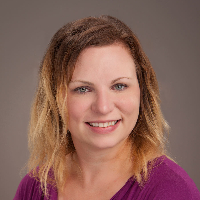
About Jill
Jill Rountree is a Licensed Master Social Worker (LMSW) in Michigan with 10 years of clinical experience. She works with adults who struggle with anxiety, depression, trauma, substance use, and life adjustments, and she lists mood-related concerns among her focus areas.
Jill has practiced in correctional facilities, outpatient clinics, and integrated health care settings. That range means she is used to straightforward, practical work across different situations. She blends short-term problem solving with deeper trauma work depending on what a person needs.
Her approach is client-centered, which means sessions focus on the concerns the person brings and on building a working relationship. She also uses Cognitive Behavioral Therapy to map how thoughts, feelings, and behaviors connect. Dialectical Behavior Therapy is used when skill-building around mindfulness and distress tolerance is helpful.
Jill also includes EMDR, which she describes as a method for processing past trauma after establishing grounding skills. Motivational Interviewing supports people making changes around substance use and other goals. She draws from these methods in ways that match the pace a person feels able to take.
Jill grew up in Southeastern Michigan and now lives near Traverse City with her family. She completed a sociology degree at the University of Michigan and a Master of Social Work at Wayne State University. Outside of therapy she is a Registered Yoga Instructor and spends time reading, cooking, and caring for her children and animals.
How Jill uses evidence-based methods online
Jill uses Cognitive Behavioral Therapy online to identify links between thoughts, feelings, and actions and to build practical steps for managing mood and anxiety. CBT sessions often include skill practice and simple behavioral experiments to test what helps.She also works with Dialectical Behavior Therapy skills when emotion regulation and distress tolerance are priorities. DBT skills focus on mindfulness, coping strategies, and reducing impulsive reactions, which can be helpful for mood swings and high emotional states.
Finding the right method is collaborative. Jill will talk with each person about goals and preferences and suggest which approach or combination might fit best. That plan can change as work progresses and needs shift.
Confirm the current session options before booking, as specific formats are listed during sign-up. Online sessions can make it easier to fit therapy into a workday, reduce travel time, or choose a shorter check-in when schedules are tight. Therapists and licensed professionals can help arrange sessions that align with a client’s routine and technology needs.
Areas of expertise
Primary focus
Also works with
Additional focus areas
Therapeutic approaches
Experience
10+ years
Credentials
Michigan
Languages
English
Frequently asked questions
What concerns does she help with?
She works with adults facing anxiety, depression, trauma, substance use, adjustment problems, ADHD, bipolar symptoms, grief, and related mood concerns.
What therapeutic style does she use?
Her work is client-centered and practical. She combines CBT, DBT, EMDR, and motivational interviewing to address symptoms and coping skills.
How much experience does she have?
Jill has ten years of experience working in correctional, outpatient, and integrated health care settings.
What are her credentials and location?
She holds an LMSW credential and practices in Michigan.
Does she offer sessions in other languages?
Sessions are offered in English only.
Can international clients work with her?
She does not accept international clients at this time.
How are sessions paid for?
Cost varies with location; sessions use a subscription that can be canceled at any time.
How do I start a first session?
Select the See online therapy options button, complete a short matching questionnaire, and schedule a first session.
Before you reach out
- Check that the state license on record covers the state you live in.
- You do not need a diagnosis or the right words. Saying "my mood has been up and down" or "I have felt low for weeks" is a fine place to start.
- Counselors offer talking support. Questions about medication belong with a doctor or psychiatrist, and the two can go side by side.
- A profile shows the topics a counselor lists; it is not a diagnosis or a promise of any result.
If you feel unsafe right now, call or text 988, or call 911.